
Choosing Between Sliding, Tilt-and-Turn & Bi-Folding Aluminium Windows in the Algarve: A Buyer's Guide
- Charlie

- Jul 28, 2025
- 6 min read
The Algarve's unique climate and lifestyle demands careful consideration when selecting window and door systems. With year-round sunshine, coastal winds, and the region's indoor-outdoor living culture, choosing the right aluminium glazing system significantly impacts comfort, energy efficiency, and property value. Each window type—sliding, tilt-and-turn, and bi-folding—offers distinct advantages suited to different applications and budgets. This buyer's guide will help you in understanding these differences, and ensures your investment delivers optimal performance in the Algarve's demanding environment.

Common Window Types in Algarve: Buyer's Guide
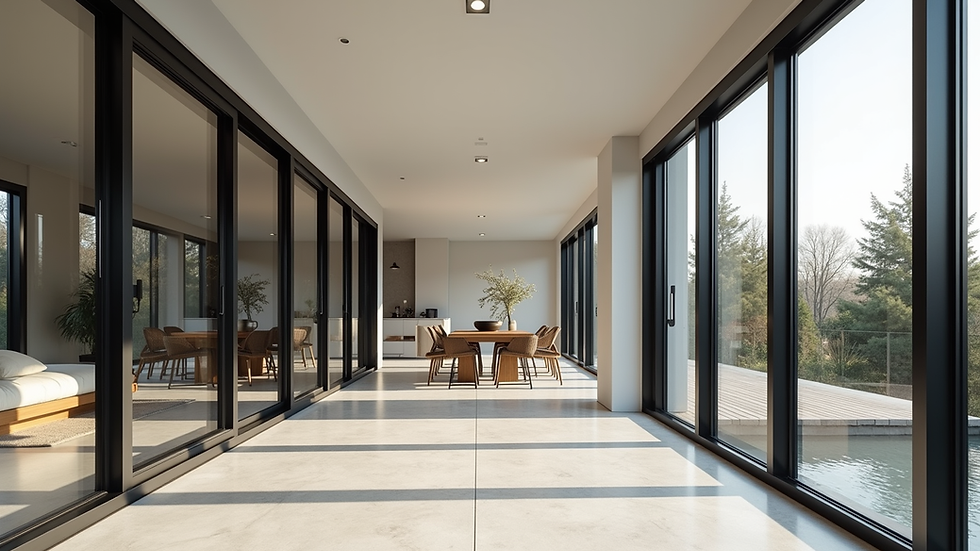
Sliding windows and doors remain the most popular choice in contemporary Algarve properties, offering unobstructed views and space-efficient operation. These systems slide horizontally on precision tracks, providing large opening areas ideal for terraces and pool areas.
Key characteristics:
Large glass areas: Maximise natural light and views
Space efficiency: No swing space required for operation
Weather sealing: Advanced track systems provide excellent water resistance
Security options: Multi-point locking systems available
Tilt-and-turn windows have gained significant popularity in the Algarve, particularly among Northern European property buyers familiar with this technology. These versatile systems offer two opening modes: tilting inward from the top for ventilation or opening fully inward like a casement.
Functional benefits:
Dual operation: Tilt for secure ventilation, turn for full access
Weather protection: Tilt position allows ventilation during light rain
Easy maintenance: Both glass surfaces accessible from inside
Superior sealing: Compression seals around entire perimeter
Bi-folding doors create dramatic openings that blur indoor-outdoor boundaries, perfect for the Algarve's outdoor lifestyle. Multiple panels fold and stack to one or both sides, creating wide, unobstructed openings.
Design advantages:
Maximum opening: Up to 90% clear opening possible
Flexible configuration: Panels can fold internally or externally
Smooth operation: Precision hardware ensures effortless movement
Weather performance: Advanced drainage and sealing systems
Vertical sliding windows offer traditional aesthetics with modern performance, particularly suitable for historic property renovations or contemporary designs requiring vertical emphasis.
Local Climate Considerations: Wind, Humidity, Temperature
Wind exposure varies significantly across the Algarve. Coastal properties face strong Atlantic winds, particularly during winter storms, while inland areas experience more moderate conditions with occasional strong northerly winds.
Coastal wind challenges:
Direct exposure: Properties within 2km of coast face sustained winds up to 80km/h
Salt-laden air: Increases corrosion potential and requires robust sealing
Debris impact: Flying sand and debris test glazing and frame durability
Pressure differentials: Wind creates positive and negative pressures affecting operation
Humidity variations impact different window types differently. Coastal areas maintain 70-85% humidity year-round, while inland regions fluctuate between 45-75% seasonally.
Temperature extremes range from 5°C winter nights to 45°C summer days on south-facing surfaces. This 40°C range creates significant thermal stress on all glazing systems.
Regional microclimates:
Western Algarve: More exposed to Atlantic weather systems
Central Algarve: Moderate coastal influence with inland characteristics
Eastern Algarve: Sheltered by Spanish coast, warmer and drier
Inland areas: Greater temperature variations, less humidity
Thermal & Acoustic Performance: Thermal-Break Systems in Algarve
Thermal performance requirements in the Algarve focus primarily on solar heat gain control and maintaining comfortable interior temperatures during intense summer heat.
Sliding systems thermal performance:
Thermal break integration: Polyamide barriers prevent heat conduction through frames
Glazing options: Double glazing with low-E coatings standard, triple glazing for premium applications
Air infiltration: Advanced track sealing systems achieve excellent air tightness
Thermal bridging: Continuous thermal breaks eliminate cold spots
Tilt-and-turn thermal advantages:
Superior sealing: Compression seals around entire perimeter provide excellent thermal performance
Thermal break effectiveness: Smaller frame sections optimise thermal break performance
Glazing integration: Accommodates high-performance glazing specifications easily
Air change control: Tilt position provides controlled ventilation without compromising thermal performance
Bi-folding thermal considerations:
Multiple sealing points: Each panel junction requires careful sealing design
Thermal break continuity: Advanced systems maintain thermal breaks across panel connections
Large glazing areas: Require high-performance glass specifications for thermal control
Operation impact: Frequent opening may affect overall thermal performance
Acoustic performance varies significantly between systems:
Sound reduction ratings:
Tilt-and-turn: STC 35-42 (excellent compression sealing)
Sliding systems: STC 30-38 (dependent on track sealing quality)
Bi-folding doors: STC 28-35 (multiple joints challenge acoustic sealing)
Light & Ventilation: Maximising Airflow vs View
Natural light optimisation is crucial in the Algarve, where intense sunshine requires careful balance between illumination and solar heat gain.
Sliding systems light performance:
Maximum glazing area: Minimal frame interference with glazing
Unobstructed views: Large panels create seamless indoor-outdoor connections
Light control: Integrate easily with external shading systems
Glare management: Low-E coatings reduce excessive brightness
Example: Lagos seafront apartment A 40m² living area with 8m² south-facing sliding doors achieves excellent natural lighting while maintaining comfortable temperatures through selective low-E glazing and external overhangs.
Ventilation strategies vary significantly between systems:
Tilt-and-turn ventilation benefits:
Controlled airflow: Tilt position creates stack effect ventilation
Security ventilation: Night cooling possible with secure tilt position
Weather protection: Ventilation continues during light precipitation
Cross-ventilation: Multiple windows create effective air movement
Example: Tavira townhouse Strategic placement of tilt-and-turn windows on opposite walls creates natural cross-ventilation, reducing air conditioning requirements by 40% during spring and autumn months.
Bi-folding door airflow:
Maximum opening: Creates dramatic indoor-outdoor flow
Flexible control: Partial opening provides graduated ventilation
Weather responsiveness: Quick closure protects against sudden weather changes
Entertainment benefits: Seamless connection for outdoor entertaining
Example: Vilamoura villa A 6-panel bi-folding door system creates a 5m wide opening, transforming a 30m² living area into an integrated indoor-outdoor entertainment space, particularly valuable for rental properties.
Maintenance and Durability in Coastal Exposure
Coastal maintenance requirements are significantly higher than inland installations due to salt air, UV exposure, and environmental contamination.
Sliding system maintenance:
Track cleaning: Weekly removal of sand and debris essential
Drainage maintenance: Monthly clearing of weep holes prevents water accumulation
Hardware lubrication: Quarterly application of marine-grade lubricants
Seal inspection: Annual replacement of weatherstripping in exposed locations
Maintenance schedule - coastal sliding doors:
Daily: Visual inspection, debris removal
Weekly: Track cleaning, operation check
Monthly: Deep clean, drainage check, hardware inspection
Annually: Professional service, seal replacement, adjustment
Tilt-and-turn maintenance advantages:
Accessible surfaces: Both glass surfaces cleanable from interior
Protected hardware: Internal hardware protected from direct salt exposure
Seal longevity: Compression seals typically last 8-10 years in coastal conditions
Adjustment capability: Precision adjustment maintains optimal performance
Bi-folding door maintenance challenges:
Multiple moving parts: Increased maintenance requirements
Track exposure: External tracks require frequent cleaning
Hardware complexity: Professional servicing recommended annually
Panel alignment: Requires periodic adjustment to maintain smooth operation
Durability comparison in coastal conditions:
Tilt-and-turn: 25-30 year lifespan with proper maintenance
Sliding systems: 20-25 year lifespan, track replacement may be needed
Bi-folding doors: 20-25 year lifespan, hardware replacement more frequent
Frequently Asked Questions
Which aluminium window type suits Algarve homes best? The choice depends on specific requirements: sliding systems excel for maximising views and space efficiency, tilt-and-turn windows provide superior thermal performance and secure ventilation, while bi-folding doors create the ultimate indoor-outdoor living experience. For most Algarve properties, a combination approach works best—sliding systems for main living areas, tilt-and-turn for bedrooms, and bi-folding doors for entertainment spaces.
Does tilt-and-turn resist coastal corrosion better than sliding? Both systems perform equally well against corrosion when specified with marine-grade aluminium alloys and appropriate powder coating. However, tilt-and-turn systems often show superior long-term performance because their compression sealing protects internal components better than sliding track systems exposed to salt air and debris.
What's the best window type for rental properties? Sliding systems typically work best for rental properties due to their intuitive operation, lower maintenance requirements, and guest familiarity. Tilt-and-turn windows can confuse guests unfamiliar with the operation, while bi-folding doors require more careful handling. However, premium rental properties benefit from bi-folding doors' dramatic indoor-outdoor connection.
How do different window types handle Algarve storms? Tilt-and-turn windows generally provide the best storm resistance due to their compression sealing and multiple locking points. Sliding systems perform well when properly maintained and closed. Bi-folding doors require careful attention during storms, with some systems featuring storm modes that lock panels securely together.
Which system offers the best security? Tilt-and-turn windows typically offer superior security with multi-point locking systems and robust hardware. Sliding systems can achieve excellent security with appropriate locking mechanisms, while bi-folding doors require careful specification of security hardware due to their multiple panels and complex operation.
Selecting the right aluminium window system for your Algarve property requires balancing performance, aesthetics, budget, and lifestyle requirements. Each system type offers distinct advantages suited to different applications and preferences. For expert guidance on specifying the optimal glazing solution for your specific Algarve property requirements, contact AltaGlaze's experienced team for a comprehensive consultation and quotation.


Comments